Glass delamination is defined as thin glass flakes shedding from the internal diameter of glass containers and vials. The flakes, also called “glass lamellae,” can be shed and suspended in parenteral drug products. Glass delamination is observed when glass-liquid interactions take place in which silica-rich layer poorly bonded to the substrate is the first stage for the initiation for delamination. In other words, it is also known as leaching of ions into product.
The following conditions can cause the glass delamination:
2011 Advisory to Drug Manufacturers
In 2011, FDA issued an advisory to drug manufacturers regarding the potential formation of glass lamellae (glass fragments) in injectable drugs filled in small-volume glass vials. The advisory noted that the Agency was drawing attention to the issue because of several drug recalls in 2010 and 2011 due to the problem. The advisory also noted that there were no known adverse events reported or directly attributed to the problem; however, glass lamellae in injectable drug products pose potential risks, particularly when drugs are administered intravenously.
The advisory noted that a number of conditions have been associated with a higher incidence of formation of glass lamellae in drug products including, among other factors, glass vials manufactured by the tubing process at higher heat, drug solutions formulated at high pH, the duration of time the drug product is in contact with the glass container, and terminal sterilization processes. The advisory also provided recommendations to help prevent the formation of glass lamellae, along with literature references for the recommendations.
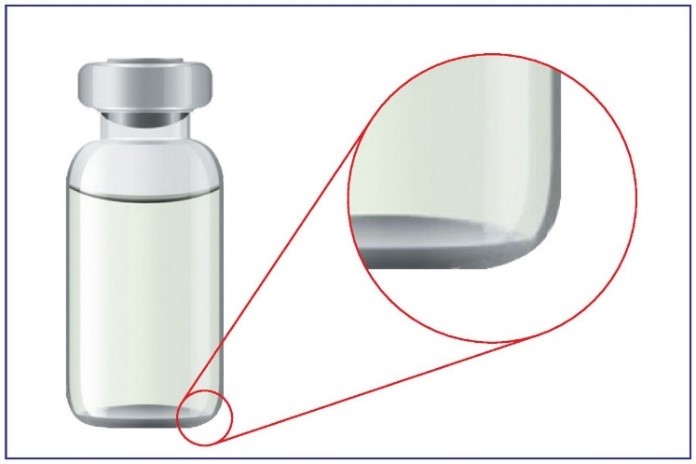
Difference between controlled and delaminated product packed in glass container (Illustration)
In the first stage of analysis, stereo-microscopy is used to examine intact vials for free floating particles with morphology consistent with glass delamination flakes. Glass delamination flakes are extremely thin and have distinct morphologies in solution and after capture on a filter membrane
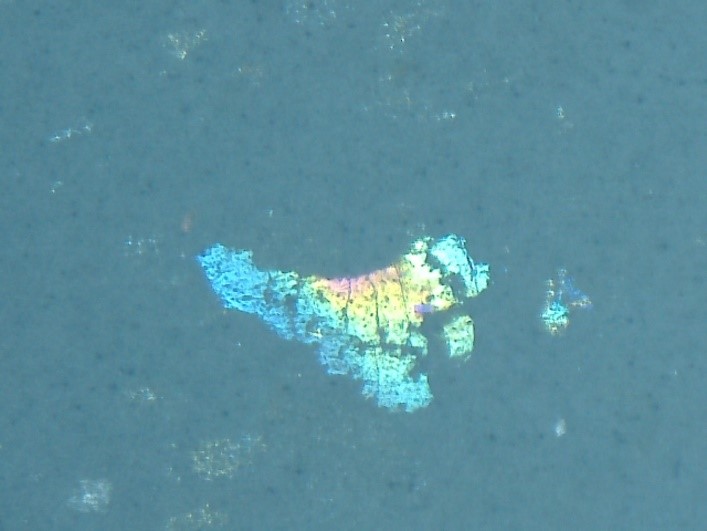
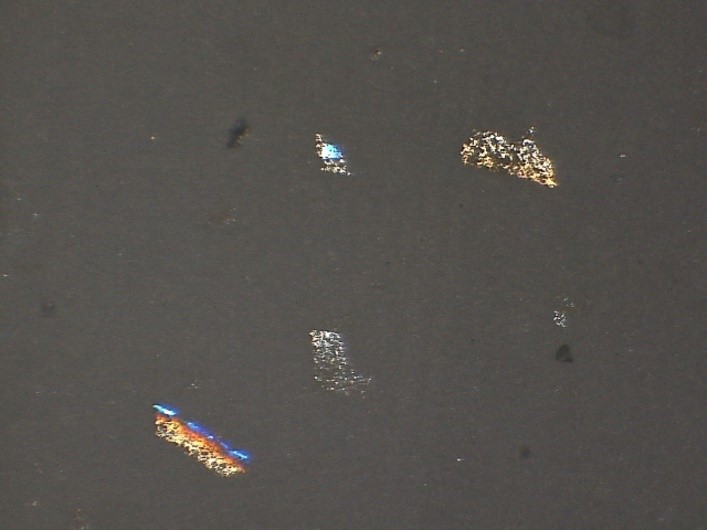
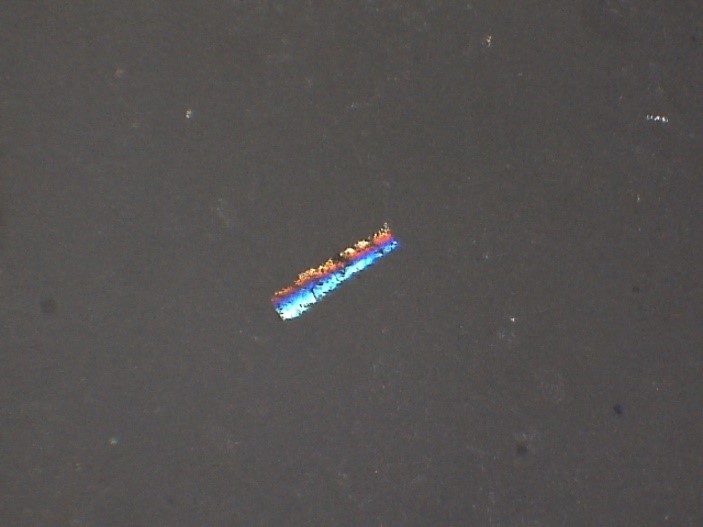
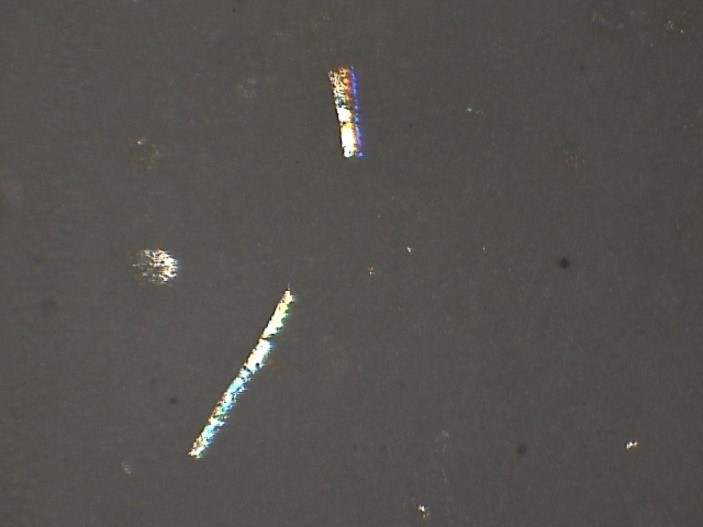
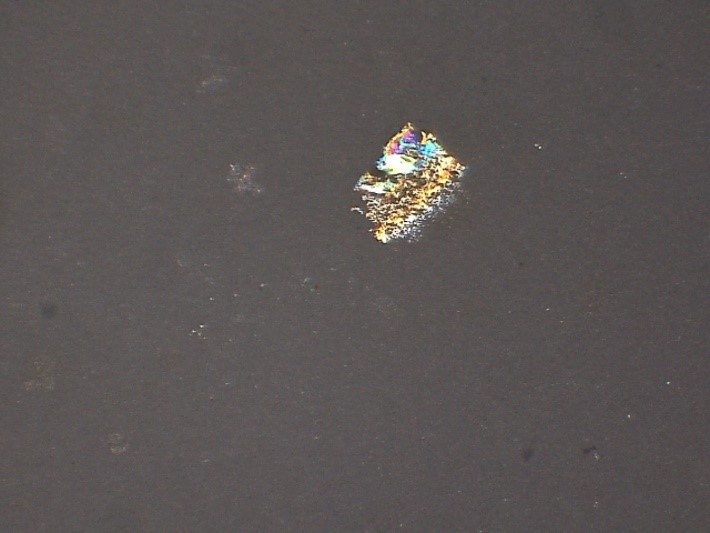
Initially, vials are examined visually using a fiber optic light. The very thin flakes produce a twinkling effect that is characteristic of glass delamination. The vials are then examined using a stereomicroscope to confirm the presence of thin flakes in solution. In order to isolate the flakes, the contents of the vials are filtered using membrane filters. The filters are then examined using a low magnification stereomicroscope using several different lighting conditions including coaxial illumination and oblique illumination, or a combination of both. Coaxial light is also referred to as episcopic light. This type of lighting is optimal for observation of thin particles, residues and films, as well as surface features. Glass delamination flakes are extremely thin and thus are usually only visible using coaxial/episcopic illumination. If present, glass delamination is in the form of very thin, sharp-edged, irregular flakes. The flakes range in color from brown for extremely thin flakes to red and blue for thicker flakes. A photomicrograph of typical glass delamination flakes is shown in Figure below observed under stereo-microscope on filter paper:
Glass flakes and lamellae exhibit characteristic coloration when observed under coaxial illumination due to thin-film interference, an optical phenomenon that occurs when light reflects from both the upper and lower surfaces of an extremely thin, transparent material and the reflected waves interact with one another.
Coaxial illumination directs light vertically through the microscope objective, normal to the surface of the sample.
When the incident light encounters a glass flake or lamella, a portion of the light is reflected from the top surface, while the remaining light transmits through the thin glass layer and is reflected from the bottom surface.
Due to the extremely small thickness of glass flakes (typically on the order of the wavelength of visible light, approximately 1 µm or less), the light reflected from the top and bottom surfaces travels slightly different optical path lengths.
The reflected light waves recombine as they return through the objective lens to the observer or camera.
The specific colors observed depend on the precise thickness of the glass flake or lamella, the refractive index of the material, and the angle of incident light inherent to coaxial illumination.
Thin-film interference effectively acts as a built-in contrast mechanism, causing otherwise transparent glass particulates to appear as bright, distinct colors, unlike most conventional particulate matter.
A defining characteristic of thin glass flakes is that the interference colors diminish or disappear when viewed under oblique (angled) illumination. The change in illumination angle alters the optical path length difference, disrupting the interference condition and significantly reducing visibility. This behavior provides a reliable visual criterion for distinguishing thin glass flakes and lamellae from non-glass or non-lamellar particulates, which do not exhibit angle-dependent color changes.
All products intended for parenteral administration must be visually inspected for the presence of particulate matter as specified in Injections and Implanted Drug Products. Dry solids, from which constituted solutions are prepared for injection, meet the requirements for Completeness and clarity of solutions in Injections and Implanted Drug Products when they are prepared just before use. The term essentially free means that when injectable drug products are inspected as described herein, no more than the specified number of units may be observed to contain visible particulates. Particulate matter is defined in Particulate Matter in Injections 〈788〉 as extraneous mobile undissolved particles, other than gas bubbles, unintentionally present in solutions. See Subvisible Particulate Matter in Therapeutic Protein Injections 〈787〉 for additional information on inherent, intrinsic, and extrinsic particulates. Examples of such particulate matter include, but are not limited to, fibers, glass, metal, elastomeric materials, and precipitates.
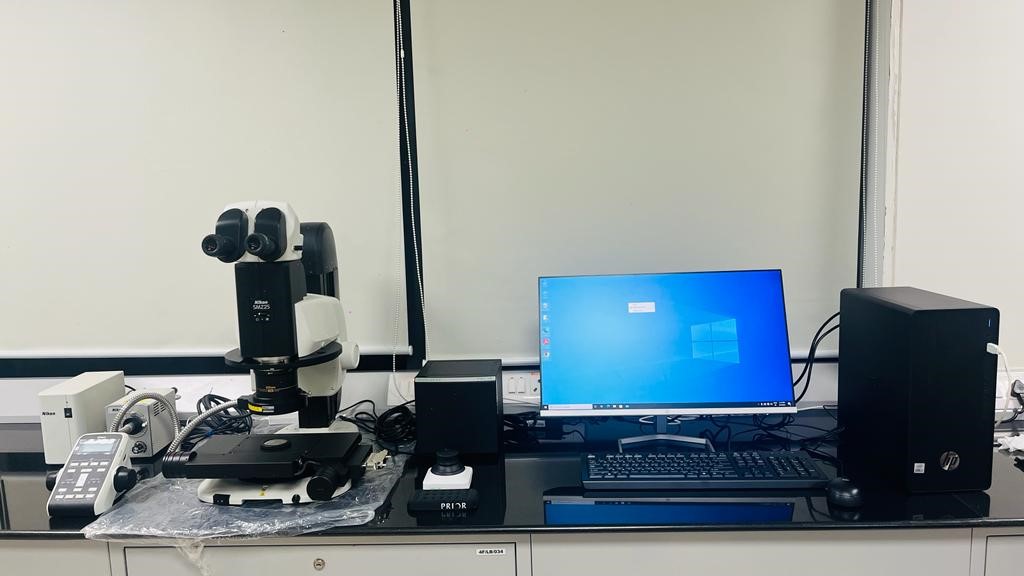
Setup of Image Provision’s stereo zoom microscope inbuilt coaxial illuminator coupled with polarizer integrated with XY motorized stage and ipvAutoCount/ipvPClass software
Fig: This system will comply with USP 788 & 790 and glass delamination study
The above image is the setup of Image Provision Technology Sterezoom Microscope with inbuilt coaxial illuminator coupled with polarizer and integrated with XY automatic stage and CLAIRITY AUTO software.
In accordance with the USP 790 standard, identifying visible particulate matter in an intact glass vial can be quite challenging, especially when dealing with an opaque solution. This is because these particles neither allow light to pass through nor reflect it. Even when we employ a specialized stereo-zoom microscope with a co-axial illuminator and a polarizer, these particles remain invisible.
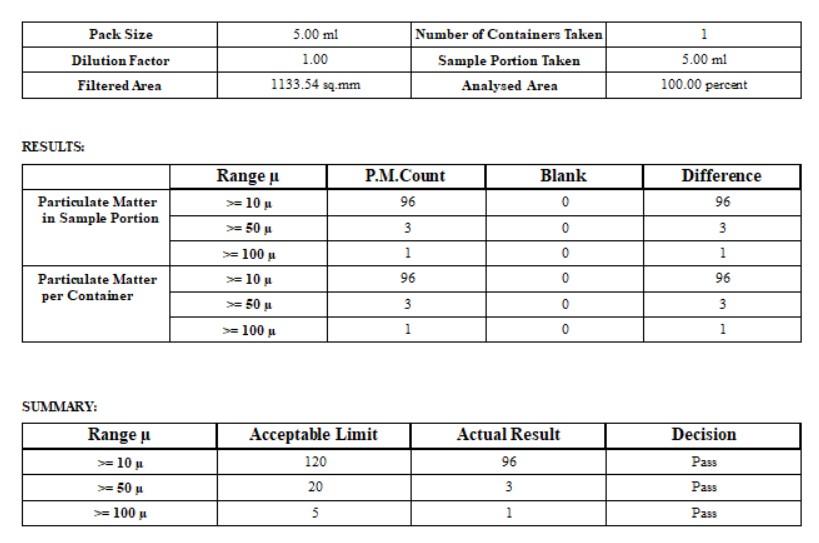
To verify the presence of visible particles in injectable drugs, it’s advisable to visually examine the cloudy solution by diluting it with a clear diluent. This process helps clear the cloudiness of the solution, making the particles visible. Furthermore, to confirm the existence of particles larger than 100 micrometers (µ), you can also perform a particulate matter count following the USP 788 standard. The below report is for reference to interpret the study